Sourdough Precision: Temperature, Hydration, and Fermentation Control
Apply laboratory precision to sourdough baking for consistent, reproducible results every time.
- Answer the main question in one sentence.
- Give the best pick and why in one line.
- Link to the product or guide for next step.
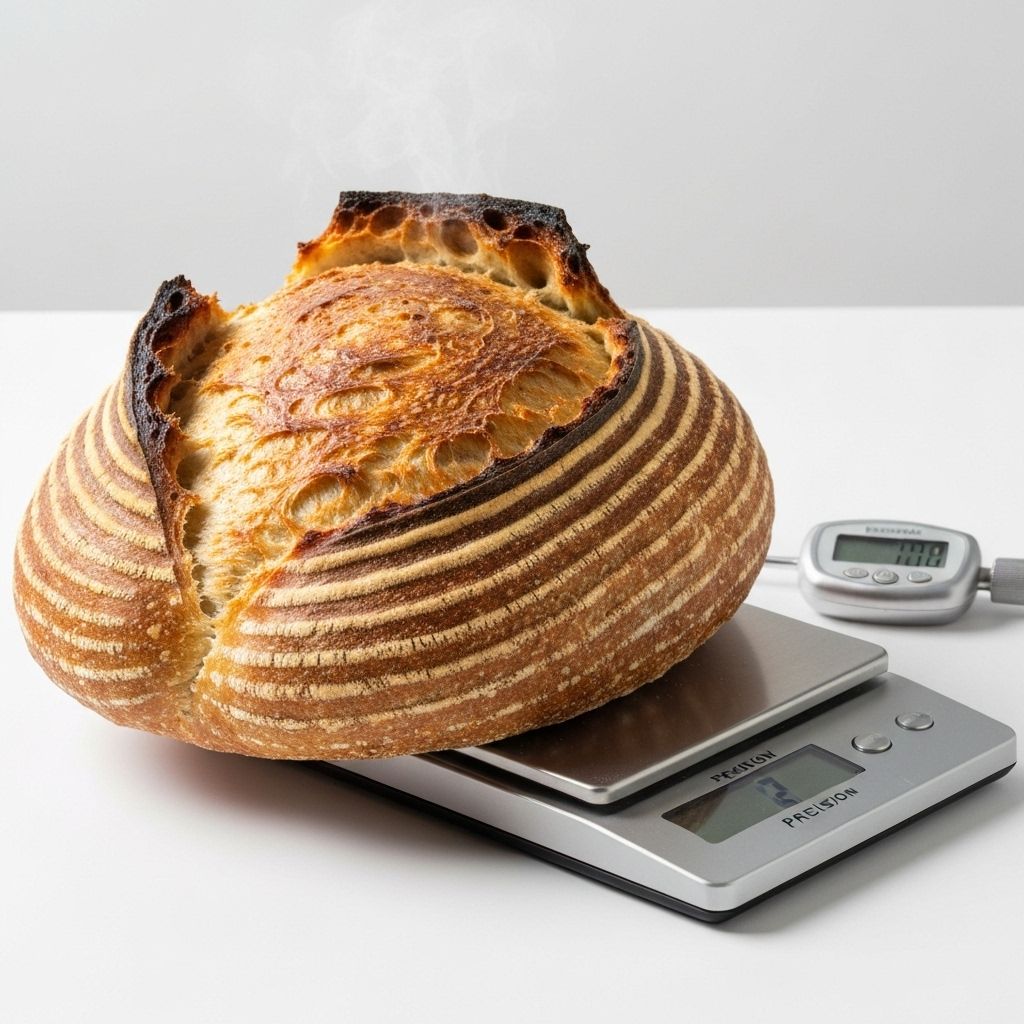
Sourdough baking transforms from unpredictable art to reliable science through precise measurement and environmental control. Success depends on managing three variables: temperature, hydration, and time.
Starter maintenance requires consistency. Feed at 1:5:5 ratio (starter:flour:water by weight) every 12 hours at 25°C. This schedule maintains peak activity while preventing excessive acidity. Use a precision scale for all measurements—even 5g variation affects fermentation rates.
Dough temperature directly controls fermentation speed. Calculate desired dough temperature (typically 25°C), then adjust water temperature using the formula: Water temp = (Desired dough temp × 4) - (Room temp + Flour temp + Starter temp). A precision thermometer ensures accuracy.
Hydration percentage dramatically affects crumb structure. 65% hydration produces tight, even crumb; 75% creates open, irregular structure; 85% yields extremely open crumb with large holes. Weigh all ingredients for exact hydration control.
Bulk fermentation continues until dough volume increases 50-75%. Use a clear container with volume markings for precise monitoring. Temperature affects timing: at 25°C, expect 4-5 hours; at 20°C, 6-8 hours. Adjust based on observed fermentation rate rather than clock time.
// RELATED_ARTICLES
The Science of Stock: Precision Temperature Control for Maximum Extraction
Learn how precise temperature management transforms simple ingredients into complex, flavorful foundations.
Sous Vide Precision: Temperature Control for Perfect Protein Texture
Master the science of precise temperature cooking to achieve restaurant-quality results with perfect reproducibility.